Showing posts with label Nigeria. Show all posts

11 December 2011

Democracy Without Technology is Void

December 11, 2011
By Philip Emeagwali


I was born in 1954 in colonial Africa. One of my most cherished mementos from the colony of Nigeria is one of the pennies I received for my school lunch allowance. The coins bore the likeness of Edward VIII, who became King of England on January 20, 1936, and were minted in anticipation of his reign. However, Edward abdicated the throne on December 11th of that year before he could be crowned. He gave up the British kingdom to marry the love of his life, an American divorcee.

In 1960, a typical day in my life began at our compound on Yoruba Road, in Sapele. Our compound was adjacent to the Eagle Club, a night club where I ran errands for music legends, such as master trumpeters E.T. Mensah, Eddy Okonta, and Zeal Onyia. They would give me a penny to buy two sticks of cigarettes and I would bring back their half-penny change.

Some mornings, my mother would give me a penny with the instructions: "Buy rice with a farthing, beans with a farthing, and bring back a half-penny change." When I told this story to my son, Ijeoma, he interrupted, saying, incredulously "Daddy, you can't get change for a penny!" I then show him my souvenir: a British West African central-holed coin, bearing the head of King George V and minted in 1936 with the inscription "one tenth of a penny." The central hole was for stringing the coins together, to carry them. The world has changed greatly since my youth!

Nigeria has existed for 96 years and has been independent for 50 years. Nigerians must look back to the first 46 years, spent under colonial rule, to understand the 50 post-colonial years of their self-rule. Looking backward, like the Sankofa, is a prerequisite for understanding the way forward.

With self-rule came responsibility. We're now being held accountable for our actions and inaction, our coups and corruption, and our civil wars in Biafra, Congo, and Rwanda.

Looking backward 96 years will enable Nigeria to understand when and where it's train derailed and how to put it back on track. I believe our train derailed because, although the 46 pre-independence years were a brain-gain period, the 50 post-independence years have been marked by the largest brain drain since the Atlantic slave trade.

Looking forward 50 years, I foresee that nations delivering information and communication technologies will indirectly rule Africa. I see the cellular phone, the computer, and the internet enabling Africa to replace selection with election. I see the internet enabling citizens to become reporters, decentralizing the media. I see technology enabling freedom of the press and democracy in Africa..

Kwame Nkrumah said, "Socialism without science is void." I say, "Democracy without technology is void."

16 October 2011

In Nigeria, Militancy Raises Specter of Civil War

12 October 2011 
David Francis


On Oct. 2, Nigeria celebrated the 51st anniversary of its freedom from British rule. A large gala was planned in Abuja, the fast-growing Nigerian capital located in the center of the country.

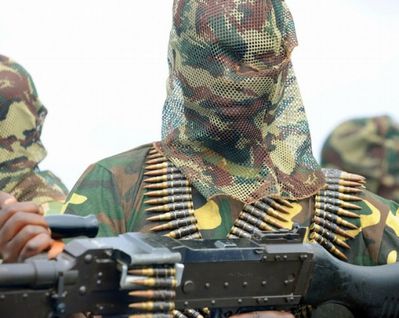
But, days before the celebrations, Boko Haram, a Muslim extremist group based in the country's north, and the Movement to Emancipate the Niger Delta (MEND), based in the country's oil-rich south, both threatened to disrupt the festivities with violence. Boko Haram had already made it clear that it was capable of attacking Abuja on Aug. 26, when it exploded a bomb at the United Nations building there, killing 23. And just a week before the scheduled gala event, a bomb scare at the country's National Assembly sent lawmakers scrambling for safety.

MEND had long ago showed itself capable of such an attack. It is responsible for a string of bombings, kidnappings and killings against the Nigerian government as well as against oil companies in the south over the past decade. And as Boko Haram has emerged, MEND has become even more active in an effort to reinsert itself into Nigeria's national conversation.

14 July 2011

Niger Delta: Four Local Communities stage Peaceful Protest against Shell

8 July 2011
Environmental Rights Action - ERA


Kolo Creek Logistics base, in the Ogbia Local Government Area of Bayelsa state four communities, Imiringi, Elebele, Otuasega and Oruma communities peacefully protest against Shell lack of respect of agreements.


Four communities where Shell Petroleum Development Company [SPDC] operates in recently issued a 14 days ultimatum to the company, demanding for implementation of agreement reached with the communities in 1999. The communities include: Oruma, Otuasega, Elebele and Imiringi; all Ogbia speaking Ijaw communities in Ogbia Local Government Area of Bayelsa State, few kilometres to President Goodluck Jonathan’s community, Otueke. 

Following the ultimatum to Shell, leaders of the community had appeared before the Joint Military Task Force [JTF] at the expiration of the time with a view to settle the matter amicably. Unfortunately, Shell could not convince the aggrieved communities that are demanding that the company honour the agreement it reached with them in 1999, and they decided to stage a peaceful protest to the heavily guarded Shell facility, the Kolo Creek Logistic Base.ERA’s field monitor witnessed the protest that took place on the 7th of July 2011 and some of the protesters spoke with him.


Testimonies

We are here for a peaceful protest but if the JTF handles this matter in a violent way we shall only retreat and return in full force. Then it will be too bad for Shell because Shell has cheated us for too long. The Kolo Creek communities have been known to be very peaceful but if the soldiers and Shell take undue advantage of our peaceful disposition today to intimidate us, we shall not take it. If we hear any gun shot or if any of our members is injured here today by the soldiers, the rest of the state and the country will hear our action. All we are demanding for is that Shell should respect the agreement it reached long ago with our people; these four communities. They agreed to extend electricity to our communities but they are not doing so; while benefiting heavily from our oil wells. This is not a fresh demand, it is an agreement reached with us that we are trying to enforce.

Amakiri Joseph, Vice-Chairman of the Community Development Committee [CDC] of Oruma


Because of our present mood I do not have much to say. Shell is wicked. They refused to implement agreements that they entered into with our community leaders some years ago. Have we not been patient enough? Can you imagine a situation where Shell prefers giving light to mosquitoes in the bush than human beings; even when the oil and gas they use on the plant that supplies them light is from our soil. All around their facility, even in the bush, they provide light. In some of these facilities you don’t see people, only mosquitoes; yet there is light there. That is why I said Shell gives light to mosquitoes, but not people in the communities where they operate.

Nothingbad Ada, from Otuasega community


I am here today because I support the demands of the four communities. We are not coming to make new demands from Shell, but that they fulfil the agreement they reached with us. We want our communities to be connected to the source of power that supplies them electricity twenty four hours every day. They cannot be taking the crude oil and gas from our environment and enjoy all the benefits and leave us in pristine condition. We know what is happening in other places where such resources are exploited. Apart from the issue of electricity, we are also demanding for good roads linking our communities. Shell should honour the agreement signed with us; that’s all.

Mrs. Beauty James, women leader of Oruma community


I retired from the Nigerian army and I am getting my pension. I just want to tell you that I am fully in support of what is going on here; the peaceful protest. If Shell is treating us well do you think our people will waste their energy on this kind of thing? There would have been no need, I tell you. The company should change its old tactics of dealing with host communities. Respect is indeed reciprocal. The only thing is, the protest should remain peaceful.Loveday Ada, retired soldier from OtuasegaI have been part of meetings held between the JTF, our communities and Shell in recent times. Those meetings were all related to the issues concerning our demand that Shell should implement the agreement it entered into with our people since 1999. Even after the expiration of the 14 days ultimatum we issued Shell, there have been steps to avoid open confrontation. Shell is fully aware of what we are here for; the company is just trying to see what we can do. Yes, we are a very peaceful people but we are also human beings and have that capacity to behave otherwise when situation demands. We are not joking, Shell should honour the 1999 agreement or else the company is free to leave our environment for us. They should give us light, water, roads and also ensure that their operation within this environment is safe for us and every other living thing in the ecosystem.

Pastor Ranami Afagha, Vice-Chairman of Imiringi community


I want to say that I am aware of what the four communities are doing there at Shell office, the Kolo Creek Logistic Base. It is very sad and unfortunate that the company should allow our people’s simple demand to linger and lead to what you have just observed. We have written several letters and held meetings in relation to an agreement Shell signed with us in 1999 in the Presence of Nigeria’s current President, Dr. Goodluck Jonathan; when he was the Deputy Governor of Bayelsa State. Shell agreed then to connect our communities to the plant supplying electricity to their office/facility here in our environment. Actually there was a time they tried to lay the lines and we were all happy. But the company later abandoned the project. Shell felt the communities should rather be connected to the public power supply grid of Power Holding Company of Nigeria [PHCN]. That was not our agreement. We want to enjoy that electricity the company is getting from our oil and gas twenty four hours daily. Apart from that, since Shell constructed a gas pipeline across the Kolo Creek, the creek has not been properly reopened to allow free flow of water. The creek is still partially blocked. ERA visited during the crossing of the gas pipeline and witnessed how it was then. Not much was done by the company after they crossed the pipeline. This is also part of the protest our people have embarked upon today. If you allow me I will continue to give more reasons why these four communities are annoyed with Shell. As community leaders, we have, however, appealed to the protesters not to take to violence but remain peaceful as they go about the protest.

Chief Ranami Joseph, Acting Paramount Ruler of Otuasega Community


Observation and conclusion

ERA’s field monitor was at the scene of the protest early enough to witness the first set of protesters as they arrived in two buses and motor bikes. The two buses were loaded with youths and women. Other buses also brought community people from the four protesting communities. When the first two buses drove towards the Shell facility, they were stopped and sent back by soldiers at the JTF check point mounted there. Although the buses turned back, the protesters came down not far from the soldiers’ position. The soldiers were telling them to leave the environment but they were adamant. At about 6:18 am when more protesters had arrived, they started to move towards the JTF check point. By this time, about 12 JTF personnel had taken position to resist the protesters and prevent them from going beyond that check point. 

This was the situation until about 7:00 a.m when some women carried a casket covered with white cloth and forced their way through the JTF check point. This action of the women received the support of some youths when they saw that the military men were trying to prevent the casket and those carrying it from passing that point. At last, after an initial struggle, the way was open for all to get access to Shell’s gate. The military officers were trying to control the situation from developing into violence, while the protesters were eager to see and hear from Shell. This scenario lingered on, when ERA’s field monitor left the environment at about 7:44 A.M. However, before leaving it was observed that though the soldiers appeared provoked, they behaved relatively well.


ERA demands:

1. Shell should respect and implement the agreements in question

2. Other grievances of the protesters should be urgently looked into with a view to responding to them positively by Shell.

3. The authorities, from local to the Federal Government should wade into this matter and ensure that Shell does the right thing by implementing agreements reached with the communities in which they operate to ease escalation of tensions.

4. The communities should continue to press their demands non-violently. 

5. The military should also remain disciplined and avoid taking negative actions against such peaceful protesters.

18 June 2011

Who are Nigeria's Boko Haram Islamists?

17 June 2011
Farouk Chothia
BBC African Service


Boko Haram, which said it bombed the police headquarters in the capital Abuja on Thursday, is fighting to overthrow the government and create an Islamic state.

Its followers are said to be influenced by the Koranic phrase which says: "Anyone who is not governed by what Allah has revealed is among the transgressors".

Boko Haram promotes a version of Islam which makes it "haram", or forbidden, for Muslims to take part in any political or social activity associated with western society.

This includes voting in elections, wearing shirts and trousers or receiving a secular education.

It led to shoot-outs on Maiduguri's streets. Hundreds of Boko Haram supporters were killed and thousands of residents fled the city.

Nigeria's security forces eventually seized the group's headquarters, capturing its fighters and killing Mr Yusuf.

His body was shown on state television, and the security forces declared Boko Haram finished.

But its fighters have regrouped under a new, unidentified leader and last year it attacked a prison in Maiduguri, freeing hundreds of the group's supporters.

Its trademark has been the use of gunmen on motorbikes, killing police, politicians and anyone who criticises it, including clerics from other Muslim traditions and a Christian preacher.

In recent months, it has staged several more audacious attacks in different parts of northern Nigeria.

These reportedly include a bombing in December in the city of Jos, a New Year's eve attack on military barracks in Abuja, and several explosions around the time of President Goodluck Jonathan's inauguration last month.

Now, it has attacked the police headquarters, signalling that it is far from finished.

The threat it poses is unlikely to disappear: Poverty-stricken northern Nigeria has a history of spawning groups similar to Boko Haram.

Analysts believe the threat will disappear only if the Nigerian government manages to reduce the region's chronic poverty, and builds an education system which gains the support of local Muslims.

14 June 2011

Nigerians at War With Each Other

6 June 2011
BBC News

In our series of viewpoints from African journalists, Sola Odunfa laments the blood-letting in Nigeria.

The statistics of fatalities are grim enough but few Nigerians are conscious of the reality that their nation is in the throes of a fierce war which is neither officially acknowledged nor likely to end soon.The blood-letting is so common that it no longer commands front-page presentation in national newspapers, except when politicians or the Central Bank governor take a rest.

Last Wednesday, the police gave, for the first time, official casualty figures for the violence that hit northern Nigeria after the presidential election in April. The figures were for only two of the five states affected by the conflict.The police said that 520 people, including six policemen, were killed in Kaduna and Niger, 81 others were wounded and at least 22,000 were displaced from their homes or communities.

In better days in this country, that information would dominate the front pages but last week one national newspaper put it on page two, another on page six and a third downgraded it to page seven.One should not blame the editors. They have probably become weary of blood-dripping reports coming to their desks daily and now they assume the proverbial posture of the ostrich.The presidential inauguration banquets turned sour on 29 May when bombs exploded near the nation's capital, Abuja, and in Bauchi and Zaria - both in northern Nigeria. No fewer than 14 lives were taken away by the bombers.


In my opinion these Biafran loyalists are on the fringes of society and entitled to have their fun as long as they do not disturb anybody else. The secessionist war ended more than 40 years ago, so why are the police still jittery at the mere mention of the word Biafra? They denied killing three of those Biafra loyalists but admitted arresting 300 of them. It is instructive that the courts have released on bail more than 200 of those charged.

In Lagos state, the police are smarting from the murder of four of their officers by soldiers, pardon me, "unknown soldiers" who were avenging the killing of one of their ranks by a policeman.

In Ibadan, 120km (74 miles) away, the smoke is just settling on the latest round of deadly battles between rival groups in the transport union.

Everywhere in southern Nigeria, armed bandits continue to brazenly rob, rape and kidnap people. In the north-central and north-eastern states, arson, malicious killings and the rain of bombs show no sign of abating. Highways nationwide are not safe either, during the day or night, as robbers rule. 

Nigerians are killing Nigerians daily but there is no-one to cry to.
In fact, we must not cry aloud for fear of scaring off potential investors. 
So, hush.

U.S. Reaffirms Commitment to Niger Delta Development

14 June 2011
Ben Dunno


The Consul General of the United States of America in Nigeria, Joseph Stafford, has said that his country was committed to working with other partners for the rapid development of the oil-rich Niger Delta region. 

Speaking in Warri while exchanging views with the former national chairman of the Traditional Rulers of Oil Minerals Producing Communities of Nigeria, TROMPCON, Charles Ayemi-Botu, the Pere of Siembiri kingdom, in Burutu local government area, Mr Stafford said he was excited to be in the oil city. He said the Niger Delta was very important to the U.S. as major American companies were operating in the region and the consulate was interested in forging closer ties with the people of the region, with a view to knowing the people, understanding their cultures and problems, and how to be of assistance. According to him, “America would do everything possible to strengthen its bond with Nigeria and the Niger Delta region in particular.

Welcoming the US top official to his palace, the traditional ruler, Mr Ayemi-Botu, commended America for its continued interest for the sustenance of democracy in Nigeria, particularly its role in the 2011 general elections. He said the Niger Delta struggle was caused by marginalisation of the people from whose land the country derives oil, its major revenue earner, adding that the youth took up arms in the name of militancy, but the royal fathers called for dialogue in the face of deprivation. He noted that “as a result of the intervention of the government and leaders of the region, there is a graveyard peace at the moment, and all President Goodluck Jonathan has to do is to be focused and put the interest of Nigeria above himself to succeed.

He called on President Jonathan to foster a stronger relationship with the American government during his four–year tenure, saying, “As a big brother, it is obvious that America wants to assist Nigeria to develop.”

Juliette's comment: Let's wait and see.... Time will tell! 

2 June 2011

Nigeria: Public Tribunal on Police Violations and Abuses

The NOPRIN Foundation, in collaboration with NATIONAL HUMAN RIGHTS COMMISSION (NHRC) and NATIONAL COMMITTEE ON TORTURE (NCoT), with support from MacArthur Foundation,USA, hereby invites you/organization to a PUBLIC TRIBUNAL ON POLICE ABUSES IN NIGERIA, for the South-South Zone.
The Public Tribunal will provide a platform and opportunity for survivors, and relatives/ counsel or other representatives of victims, of police abuses in Nigeria, on their behalf, to testify before a panel of eminent Nigerians about the violations or abuses they have suffered in the hands of the Police or other law enforcement personnel. The panel will comprise representatives of the African Commission on Human and People’s Rights, National Human Rights Commission, National Committee on Torture, and Human Rights Experts. The Tribunal will focus on cases of indefinite detention without trial; torture, other inhuman or degrading treatment or punishment; extrajudicial killing, rape and sexual violence.
In 2010, NOPRIN, NHRC and NCoT held public tribunals in Abuja (for the North Central Zone), Akure (for the Southwest Zone), and Owerri (for the Southeast Zone). The public tribunal has become an effective and popular strategy of public advocacy against police violations and of naming and shaming of perpetrators. The tribunal has achieved significant results such as leading to disciplinary measures against police and other law enforcement personnel who perpetrate abuses; reopening of investigations into abandoned or twisted cases of police killings and cover-up of crimes; orderly room trial/court marshalling, dismissal and prosecution of police and military personnel indicted for violations and abuse of powers; recovery of bribe extorted by police personnel from victims of crime in the course of investigation, as well as inspired law enforcement policy changes, etc. The tribunal has also sought to assist government agencies statutorily charged with oversight of the police to carry out their mandates effectively and timely.
The Calabar Public Hearing will provide an opportunity for survivors, relatives or other representatives of victims of police abuses from the 6 states in the South/South Zone to testify before the panel of eminent Nigerians about their experiences and seek redress and remedy through mechanisms of internal control and external accountability.
Date          June 1 – 3, 2011
June 1: Arrival
June 2: Opening Ceremony and Public Hearing
June 3: Departure
Venue: Jorany Hotel, 153, Asari Eso Layout (off MCC/Timber Market, by Mobil Filling Station), Calabar, Cross River State.
Time         9:00 a.m. – 5.30 p. m.
Chairman, Opening Session: AIG, ZONE 6, Calabar
Goodwill Message: His Excellency, Dr. Liyel Imoke, Governor of Cross River State
About NOPRIN Foundation:
NOPRIN Foundation (formerly Network on Police Reform in Nigeria) is a network of 46 civil society organizations spread across Nigeria, and committed to promoting police accountability and respect for human rights. It was established in 2000 to provide opportunity for civil society involvement in police reform, and the promotion of safety, security and justice in Nigeria. NOPRIN is registered with the Corporate Affairs Commission, and carries out its mandate through monitoring, field research and investigation, documentation, publication, campaign and advocacy. NOPRIN partners with national, international, governmental and intergovernmental organizations and institutions in implementing its programs aimed at transforming law enforcement institutions and practices in Nigeria.

For further information or inquiry, please contact:
Okechukwu Nwanguma
Program Coordinator
Mobile: 08064974531
Website: www.noprin@noprin.org

4 April 2011

Nigeria struggles to salvage credible polls

4 April 2011
By Nick Tattersall
Reuters


* Faith in electoral commission badly damaged
* Huge logistical challenges remain
* Conspiracy theories risk riling up voters

Nigeria faces an uphill struggle to salvage credible elections from administrative chaos after aborting its first round of polling this weekend, but the move at least shows some determination to try to get things right.

Africa's most populous nation had to abandon parliamentary polls on Saturday after voting materials failed to arrive in many parts of the country, sparking fury among voters who were promised a break with a history of flawed and violent polls.

It then pushed back the whole election timetable -- including a presidential vote, now scheduled for April 16 -- so as to buy time to solve the logistical problems.
"In the past Nigeria has cancelled good elections and endorsed bad ones. This is perhaps the first time we're seeing a sham election nipped in the bud," Tolu Ogunlesi, a columnist for Nigerian newspaper Next, told Reuters.

"If that's not some form of progress, I wonder what is."

But some in Africa's most populous nation saw a conspiracy to deprive them of a free election. The uncertainty risks leaving the country's 73 million voters disillusioned and heaps additional pressure on the embattled electoral commission.

An electoral official in the northern city of Zaria was beaten up for announcing the postponement on Saturday, while voters in the southern commercial hub Lagos remonstrated with police over what would happen to the ballots already cast.

"At stake could be the credibility of Nigeria's election system, as well as the government that will result from it," said Joe Clark, former prime minister of Canada and one of the leaders of a National Democratic Institute observer team.

"TIP OF THE ICEBERG"

The new election timetable sets parliamentary polls for April 9, presidential elections a week later and governorship elections in the 36 states on April 26, leaving precious little time to get things right.

"Some voters may not return to the polls on the new date after the short-notice postponement, potentially affecting results," said Sebastian Boe, an analyst at IHS Global Insight.

The shame-faced head of the Independent National Electoral Commission (INEC), Attahiru Jega, said he had been let down by suppliers who blamed shipping problems caused by the tsunami in Japan for failing to get ballot papers to Nigeria on time.
One Western diplomat said the logistical challenges identified by Jega were "just the tip of the iceberg" and that several hundred tonnes of ballot papers and results sheets for the presidential polls alone were yet to arrive.

"Unfortunately, it appears that Jega underestimated the tremendous logistical challenge involved in bringing electoral materials from abroad," the diplomat said.

"The past two days of confusion and chaos have severely undermined public confidence in INEC, its chairman and the overall electoral process ... Still, most Nigerians seem willing to give Jega a chance," the diplomat said.

Where voting did begin on Saturday, it was clear people would fight to ensure their votes counted.

In the populous Ebute Metta district of Lagos, voters vowed to return by torchlight to watch the count, while in one polling station in the northern city of Kano a man trying to buy voter cards was beaten unconscious by voters waiting to be registered. "The next few days will be key in terms of managing perceptions and restoring confidence," the diplomat said.

"The north is abuzz with rumours that the National Assembly elections were cancelled midstream because the ruling party was losing badly. We're concerned further mis-steps may increase tensions and lead to a deteriorating security environment."

CONSPIRACY THEORIES

One foreign observer monitoring the polls said the greatest risk now was that a "cock-up turns into a conspiracy theory". "This postponement has given a big and undue advantage to the ruling People's Democratic Party (PDP) and their candidates, who have unhindered access to huge government funds," said the Niger Delta People's Salvation Front (NDPSF), one of many activist groups in the country's volatile southern oil region.

Although all of the major political parties met with Jega and agreed on the postponement, similar conspiracy theories were being peddled by opposition officials in parts of the north.

"The PDP is aware of the spurious allegations of attempts at rigging made against it by opponents," the PDP's presidential campaign council, which is organising President Goodluck Jonathan's election bid, said in a statement.

"We see such distractions as the rantings of those who see failure and envisage defeat at the polls and we urge our teeming supporters not to fret," it said. Jega could now struggle to rebuild confidence if opportunistic politicians rile up the electorate, risking a repeat of the violent and flawed polls of 2007, when observers questioned whether the outcome reflected the will of the people.

"Nigeria is a huge, complex country with a history over many years of mostly very bad elections," said Antony Goldman, a Nigeria expert and head of London-based PM Consulting.
"There has been a gathering awareness that a further deterioration from the dismal standards set in 2007 might threaten constitutional rule, and potentially the integrity of the nation itself," he said.

"If the elections can now pass off peacefully, the situation could perhaps be salvaged. But an already immense challenge has become more difficult still." (For more Reuters Africa coverage and to have your say on the top issues, visit: af.reuters.com/ ) (Additional reporting by Matthew Tostevin in Abuja, Joe Penney in Kano, Sahabi Yahaya in Kaduna, Writing by Nick Tattersall; Editing by Matthew Tostevin)

10 March 2011

Niger Delta: Harrassment and Intimidation of Journalists in Yenagoa

10 March 2011
Alagoa Morris
ERA


PRESS STATEMENT


It is a known fact that the control of crowds is not an easy task in terms of security, especially in presidential campaign rallies. Apart from deaths occasioned by stampede, heat and violence, the security operatives and organizer are very much concerned with the safety of their principals, the candidates presenting themselves to the people. Some deaths have so far been recorded around the country in relation to campaign rallies, including Port Harcourt, the capital of Rivers State during such a rally organized by the ruling Peoples Democratic Party [PDP].However, one major thing about such gathering is that the events has to be reported by journalists and, these people that brings us news often fall victim to the lapses in security arrangements. While this is often the cases around the country during important gatherings and political campaign rallies, the latest is the incident of yesterday in Yenagoa, at the Venue of PDP Presidential campaign rally, where some state Correspondents was held hostage and manhandled by security agents as allegedly ordered by the Aide-De – Camp [ADC] to the President, Lt.Col.Ojogbane Adegbe.

When the significant role journalist play in bringing about better societies the world over is taken at a glance: educating, informing, entertaining and, in fact bridging the lacuna in news and information, despite the fact that, as citizens, their Fundamental Human Rights ought to be protected; it becomes so disturbing to note how these set of professionals are being maltreated in Nigeria. It is really sad to note that journalists who were trying to leave the venue of the Presidential soon after Mr. President left the venue were actually disallowed from going out to file in their report to the respective media organization/houses. They were forced back and thrown over to the barricaded area and guarded to ensure that they do not leave at the time they wanted to leave to send their reports. One of the victims was THISDAY’s Segun James.

In the light of the above, the need for good working relationship between journalists and security personnel during such important gatherings, and the avoidance of a repeat, the CLO is constrained to make the following demands and recommendation:

1 Because there is no way journalists cannot cover such events, proper recognition should be always accorded this very important professionals before, during and after the events.

2 Those in charge of security should ensure that all journalist accredited to cover such events are duly briefed at least twenty four hours before the event and proper, identifiable tags are made available to each and every one of them, that gives them some measure of air of freedom to enter or leave such venues.

3 The authorities should openly apologize for the continued harassment of journalists, even for this recent case in Yenagoa.

4 Security agencies should also recognize the fact that they ought to work in close collaboration with newsmen, to ensure that the society gets the actual news and on time, to avoid rumour. The scenario whereby security agents or soldier manhandle journalists does not portray the nation in good light. Journalists, in their own right ought to be treated with respect. Our society would be worse for it without the effort of journalists; hence the authorities must take appropriate steps to put an end to all forms of maltreatment meted out on journalists in the country. Enough is enough.

5 The Nigerian Union of Journalists must rise up to the occasion and make the necessary demands from government for the protection of not only their members Fundamental Human Rights, but their rights as professionals whose areas of jurisdiction cannot be limited by intimidation. And, until the right thing is done on the subject matter, the CLO will continue to demand that the authorities prevail on the security agencies to behave in civilized manner to fellow citizens going about their legitimate duties to their employers and society in general.

The act by the security officers against journalists in Yenagoa yesterday is totally unacceptable; this has become a recurring decimal and we demand an end to the act.

9 February 2011

Foreign Interference in Nigeria

23 December 2010
Noor Adam Essack 


Shell's grip on the country


According to a leaked US diplomatic cable, Shell claimed it had inserted staff into all the main ministries of the Nigerian government, giving it access to politicians' every move in the oil-rich Niger Delta. The company's top executive in Nigeria (Ann Pickard, then Shell's vice-president for sub-Saharan Africa) told US diplomats that Shell had seconded employees to every relevant department and so knew "everything that was being done in those ministries". She boasted that the Nigerian government had "forgotten" about the extent of Shell's infiltration and was unaware of how much the company knew about its deliberations. The cache of secret dispatches from Washington's embassies in Africa also revealed that the Anglo-Dutch oil firm swapped intelligence with the US, in one case providing US diplomats with the names of Nigerian politicians it suspected of supporting militant activity, and requesting information from the US on whether the militants had acquired anti-aircraft missiles.

Campaigners said the revelation about Shell in Nigeria demonstrated the tangled links between the oil firm and politicians in the country where, despite billions of dollars in oil revenue, 70% of people live below the poverty line.

In a confidential memo from the US embassy in Abuja on 20 October 2009, Pickard related how the company had obtained a letter showing that the Nigerian government had invited bids for oil concessions from China. She said the minister of state for petroleum resources, Odein Ajumogobia, had denied the letter had been sent but Shell knew similar correspondence had taken place with China and Russia. Nigeria is Africa's leading oil producer and the eighth biggest exporter in the world, accounting for 8% of US oil imports. The WikiLeaks disclosure was seized on by campaigners as evidence of Shell's vice-like grip on the country's oil wealth. "Shell is everywhere. They have an eye and an ear in every ministry of Nigeria. They have people on the payroll in every community, which is why they get away with everything. They are more powerful than the Nigerian government," said Celestine AkpoBari, of Social Action Nigeria.

The criticism was echoed by Ben Amunwa of the London-based oil watchdog Platform. "Shell claims to have nothing to do with Nigerian politics," he said. "In reality, Shell works deep inside the system, and has long exploited political channels in Nigeria to its own advantage."

Pickard also said Shell had learned from the British government details of Russian energy company Gazprom's ambitions to enter the Nigerian market. In June last year, Gazprom signed a $2.5bn (£1.5bn) deal with the Nigerian National Petroleum Corporation to build refineries, pipelines and gas power stations.
The cable confirms what communities in the Niger Delta have long suspected. Shell wields enormous power over Nigeria and is actively exploiting the political turmoil in the West African nation. The oil giant has a major influence on any laws and policy decisions that affect its profits. For decades, Shell has cultivated a political environment where it can get away with almost anything, from tax dodging to daily oil spills and gas flaring, in violation of human rights and Nigerian law. The company’s political strategy boosts its profits, but it has devastated the lives of local communities and aided corruption in Nigeria. 


Pfizer sabotages lawsuit

A US diplomatic cable exposed by WikiLeaks alleges that the pharmaceutical company Pfizer had hired private investigators to gather evidence of corruption by the then-attorney general in order to get him to drop a federal lawsuit against the pharmaceutical giant.

Pfizer had been sued by the Kano state government on behalf of citizens and an agreement was reached in April of 2009 for US $75 million, but the federal government was also seeking to sue the company for an amount that remains undisclosed. The lawsuits related to Pfizer’s testing of a new meningitis drug in 1996 on 100 children in the country, while another 100 were treated with a standard antibiotic. Pfizer is accused of causing the deaths of at least 11 children while several dozen were left deformed or disabled for life. The company was accused of using poverty-stricken members of the population for the testing of their new product, which was proven hazardous. Pfizer was further accused of failing to obtain patients’ “informed consent” before administering the antibiotic Trovan, which has since been singled out by the Food and Drug Administration as dangerous due to its propensity for inducing liver failure and has been withdrawn from the market. 

When the Nigerian federal government attempted to sue Pfizer, the company allegedly began leaking evidence of corruption by Federal Attorney General Michael Aondoakaa to local media outlets, which caused his resignation and the suspension of the lawsuit. 

John Le Carré wrote the script for the film The Constant Gardener based on this sordid story.


Ken Saro-Wiwa was framed

The controversy surrounding Ken Saro-Wiwa has persisted for 15 years. Compelling new evidence suggests the Nigerian military killed four Ogoni elders whose murders led to the execution of the playwright and activist Ken Saro-Wiwa in 1995. The evidence also reveals that the notorious military commander Lieutenant-Colonel Paul Okuntimo, whose troops were implicated in murder and rape, was in the pay of Shell at the time of the killings and was driven around in a Shell vehicle.

Since the time of Saro-Wiwa's death, Shell has insisted that it had no financial relationship with the Nigerian military, although it has admitted paying it "field allowances" on two occasions. It has consistently denied any widespread collusion and payments. However, witness accounts that were to be used in evidence in the case of Wiwa vs Shell, brought by Ken Saro-Wiwa's family provide fresh insight into Shell's financial and logistical involvement with the Nigerian military and with Lt-Col Okuntimo. The case was settled last May for $15.5m, just days before it was due to start in New York. The settlement meant the testimonies were never made public.

One of the key witnesses due to testify was Boniface Ejiogu, Lt-Col Okuntimo's orderly in the Internal Security Task Force, a coalition of army, navy and police. Mr Ejiogu testified to standing guard as victims were raped and tortured while Lt-Col Okuntimo was in command. Asked if he ever saw his commander receive money from Shell, he said he witnessed it on two occasions. 

MrEjiogu also offers compelling evidence as to who may have murdered the four Ogoni elders at a meeting on 21 May 1994. Saro-Wiwa was due to speak but was turned away by the military. Mr Ejiogu said he heard Lt-Col Okuntimo tell his task force commander to "waste them... in the army you waste them is when you are shooting rapidly". Within 24 hours Saro-Wiwa was arrested and charged with the murders. It was implied that he had had the elders killed because of their moderate stance on Ogoni issues. Despite an international outcry, he was hanged in November 1995, following a sham trial described by the then British prime minister, John Major, as "judicial murder".