Scott A Morgan
Showing posts with label Sudan. Show all posts
Showing posts with label Sudan. Show all posts
12 July 2011
After South Sudan Who will become Independent?
12 juillet 2011
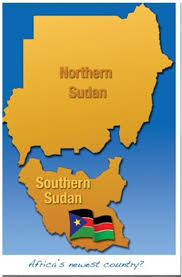
July 9th has come and gone on the calendar. The Republic of South Sudan has become the newest independent state in Africa. Although the separation was generally peaceful there are underlying tensions that could quickly lead to Armed Conflict. But now there is a question that needs to be asked: Is Southern Sudan going to be the final state to gain independence?
The Short answer has to be No. There are efforts underway in the “Breakaway” region of Somaliland to be recognized as an Independent State. There have been reports that Kenya has done so and there is a push for Britain to do so as well. Several years ago there was an effort by those seeking this to have the US follow along through an attempt to pass legislation in Congress. Officially the position of the United States is that the Administration will wait until the African Union does this. So this means that there is a remote chance that this will happen.
Another Country that may have such a similar effort occur is Nigeria. We all have heard of the situation in the Niger Delta. It generates income coming into the Country with its oil reserves but there is little investment in the infrastructure in the region. A Militant Group the NDLF (Niger Delta Liberation Force) has urged President Jonathan to convene a SNC (Sovereign National Conference) to see if the Niger Delta can have a peaceful separation from the rest of the Country without bloodshed.
Another Potential Flashpoint has to be the Casamance region in Senegal. This has been the scene of an on-again/off-again insurgency against the Wade Regime. This region which lies along the border with the Gambia has had the rebels being supported by Guinea in the past. As long as there is not any resolution in this situation and is allowed to fester than problems could break out in West Africa yet again.
It would be a sin of omission not to discuss the situation in the Eastern DRC. Although it has not advocated Independence from Kinshasa the Central Government has been unable to effectively administer the region due to poor infrastructure, corruption and outside actors. So the Kivus currently operate with little oversight. It is possible to conceive that Rwanda or even Uganda can attempt to either separate territory in order to annex it outright or to create a situation whereupon they can create an “independent buffer state” to enhance their agenda for the region and to gain access to the copious natural resources in these two provinces.This means that the State Department, the Pentagon and the Central Intelligence Agency will really have to maintain constant vigilance monitoring these situations so that any information can be presented to the President in a quick and timely manner. This has not always been the case in recent months however. But these situations are just the tip of the iceberg.
The Author Comments on US Policy towards Africa and publishes Confused Eagle on the Internet. It can be found at confusedeagle.livejournal.com

9 February 2011
How oil politics split nations
18 January 2011
Nnimmo Bassey
Executive Director
Environment Right Action (ERA)
As Sudanese vote this week on staying as one nation or becoming two, my mind goes back to when civil war broke out in Nigeria in 1967. I recall that when Biafra was announced, I leapt in celebration at the novelty of suddenly being a citizen of a new country under a new flag and with a bearded man at the head of state. What my young mind could not fathom, and did not question, were the reasons for the emergence of the new nation. What were the announced reasons and what were the unspoken ones?
Before we could settle to savour the change expected from the split, things took a different turn. The war drums sounded, and bullets began to fly. Streams of refugees flooded through our village and soon enough, we were on the move. I still recall seeing starving kids, rotting corpses by the roadside, and I can hear the screams of young ladies who were captured and forcibly married by rampaging troops.
We see the great mobilisations by the peoples of Southern Sudan for a split and when the result of the referendum is announced, we can bet that the result is like a dream long foretold.
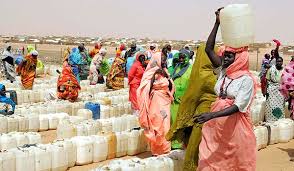
There are many reasons why the South should be eager to drift away. Indices of development from the country are severely skewed against the region. Reports have it that over 80 per cent of the inhabitants of Southern Sudan have no sanitation facilities.
While almost 70 per cent of the people living in Khartoum, River Nile, and Gezira states have access to pipe borne water, the people in the south depend on boreholes and rudimentary water wells. They and those in the Darfur area depend largely on food aid for survival on account of the dislocation of the agricultural sector by entrenched violent conflict.
Certainly, all will agree that oil is a major factor in the political fortunes of Nigeria. We may squabble and bicker under the cover of ethnic or regional differences, but beneath the surface, the struggle is over who controls the massive oil and gas resources and revenues of the land. The struggle for power at the centre was set the moment a unitary system of government was decreed in 1966 and has since coloured the sort of federal system that the nation runs on.
Oil is a principal factor in the current political situation in Sudan. Exploration activities started in the 1960s by AGIP, the Italian oil company, which found natural gas in the Red Sea. The American oil giant, Chevron, followed suit but never revealed what they found, according to reports.
Like Nigeria, like Sudan
As time went on, a number of Chinese and Asian companies jumped in and finally oil was produced from the Muglad Oil Basin, Blocks 2 and 4. Sudan is divided into 17 oil concession blocks with SUDAPET, the government owned company, working in joint partnership with the various Asian and European oil companies.
As aptly captured by a Sudanese academic in a recent Oilwatch Africa meeting, “Sudanese oil has been developed against the background of war, international sanctions, and political isolation. It has been developed at a time of imposing demand by emerging economies like India and China and a time of unprecedented soaring prices of both food and oil and the controversial use of agricultural crops as a source of bio-energy.”
Quite like Nigeria, oil produces over 75 per cent of the foreign exchange earnings of Sudan. Other production sectors have equally been almost completely neglected. Before oil, over 50 per cent of Sudan’s revenues came from the agriculture sector, contributed 95 per cent of the export earnings, and employed a high percentage of the total labour force in the country.
With oil as a major economic factor, and seeing that the bulk comes from the South, developments nevertheless eluded the region. An example can be seen in the first refinery which was sited about 70 Km north of Khartoum. Crude export pipelines runs northward and amount to about 5326 km in length.
The reality is that with the available infrastructure, the South cannot export its oil except through the North. In addition, as the date of possible separation drew nearer, new oil blocks that transverse northern and southern areas were being allocated.
Oil companies operating in Sudan are exempted from paying taxes. The contracts were mostly negotiated when the price of an oil barrel of oil was less than 20 US dollars. Surely, the companies operating here could not hope for a better space for reckless exploitation and incredibly high profit margins. Added to this is the fact that the regulatory regime is largely non-existent and even the conduct of environmental impact assessments are selective.
With Sudan having about five billion barrels of oil in reserves and currently exporting billions of dollars worth of oil per year, it must be painful for Khartoum to let the oil rich South go. About 80 per cent of Sudan’s oil exports come from the southern states. Only 50 per cent of revenue accruing from oil goes to the South, a factor that undoubtedly stokes the embers of discontent in the area.
As the peoples of Sudan vote for the emergence of a new Southern nation, dreams of the desperately poor and those traumatised by war and cruelties will run high. Children who never experienced peaceful environments will be marvelling at great possibilities. Oil has certainly greased the engines of exploitation, oppression and war in Sudan. It is oiling the machines of separation today. What will it lubricate next?
These are questions we must mull over, but a bigger question is over the implication of continued fragmentation for Africa as a whole. At a time when the continent should be coming together and erasing the arbitrary boundary lines drawn by colonialist adventurers, we continue to fragment. Certainly, this cannot be the only way to overcome poor and parasitic governance.
Nnimmo Bassey
Executive Director
Environment Right Action (ERA)
As Sudanese vote this week on staying as one nation or becoming two, my mind goes back to when civil war broke out in Nigeria in 1967. I recall that when Biafra was announced, I leapt in celebration at the novelty of suddenly being a citizen of a new country under a new flag and with a bearded man at the head of state. What my young mind could not fathom, and did not question, were the reasons for the emergence of the new nation. What were the announced reasons and what were the unspoken ones?
Before we could settle to savour the change expected from the split, things took a different turn. The war drums sounded, and bullets began to fly. Streams of refugees flooded through our village and soon enough, we were on the move. I still recall seeing starving kids, rotting corpses by the roadside, and I can hear the screams of young ladies who were captured and forcibly married by rampaging troops.
We see the great mobilisations by the peoples of Southern Sudan for a split and when the result of the referendum is announced, we can bet that the result is like a dream long foretold.
There are many reasons why the South should be eager to drift away. Indices of development from the country are severely skewed against the region. Reports have it that over 80 per cent of the inhabitants of Southern Sudan have no sanitation facilities.
While almost 70 per cent of the people living in Khartoum, River Nile, and Gezira states have access to pipe borne water, the people in the south depend on boreholes and rudimentary water wells. They and those in the Darfur area depend largely on food aid for survival on account of the dislocation of the agricultural sector by entrenched violent conflict.
Certainly, all will agree that oil is a major factor in the political fortunes of Nigeria. We may squabble and bicker under the cover of ethnic or regional differences, but beneath the surface, the struggle is over who controls the massive oil and gas resources and revenues of the land. The struggle for power at the centre was set the moment a unitary system of government was decreed in 1966 and has since coloured the sort of federal system that the nation runs on.
Oil is a principal factor in the current political situation in Sudan. Exploration activities started in the 1960s by AGIP, the Italian oil company, which found natural gas in the Red Sea. The American oil giant, Chevron, followed suit but never revealed what they found, according to reports.
Like Nigeria, like Sudan
As time went on, a number of Chinese and Asian companies jumped in and finally oil was produced from the Muglad Oil Basin, Blocks 2 and 4. Sudan is divided into 17 oil concession blocks with SUDAPET, the government owned company, working in joint partnership with the various Asian and European oil companies.
As aptly captured by a Sudanese academic in a recent Oilwatch Africa meeting, “Sudanese oil has been developed against the background of war, international sanctions, and political isolation. It has been developed at a time of imposing demand by emerging economies like India and China and a time of unprecedented soaring prices of both food and oil and the controversial use of agricultural crops as a source of bio-energy.”
Quite like Nigeria, oil produces over 75 per cent of the foreign exchange earnings of Sudan. Other production sectors have equally been almost completely neglected. Before oil, over 50 per cent of Sudan’s revenues came from the agriculture sector, contributed 95 per cent of the export earnings, and employed a high percentage of the total labour force in the country.
With oil as a major economic factor, and seeing that the bulk comes from the South, developments nevertheless eluded the region. An example can be seen in the first refinery which was sited about 70 Km north of Khartoum. Crude export pipelines runs northward and amount to about 5326 km in length.
The reality is that with the available infrastructure, the South cannot export its oil except through the North. In addition, as the date of possible separation drew nearer, new oil blocks that transverse northern and southern areas were being allocated.
Oil companies operating in Sudan are exempted from paying taxes. The contracts were mostly negotiated when the price of an oil barrel of oil was less than 20 US dollars. Surely, the companies operating here could not hope for a better space for reckless exploitation and incredibly high profit margins. Added to this is the fact that the regulatory regime is largely non-existent and even the conduct of environmental impact assessments are selective.
With Sudan having about five billion barrels of oil in reserves and currently exporting billions of dollars worth of oil per year, it must be painful for Khartoum to let the oil rich South go. About 80 per cent of Sudan’s oil exports come from the southern states. Only 50 per cent of revenue accruing from oil goes to the South, a factor that undoubtedly stokes the embers of discontent in the area.
As the peoples of Sudan vote for the emergence of a new Southern nation, dreams of the desperately poor and those traumatised by war and cruelties will run high. Children who never experienced peaceful environments will be marvelling at great possibilities. Oil has certainly greased the engines of exploitation, oppression and war in Sudan. It is oiling the machines of separation today. What will it lubricate next?
These are questions we must mull over, but a bigger question is over the implication of continued fragmentation for Africa as a whole. At a time when the continent should be coming together and erasing the arbitrary boundary lines drawn by colonialist adventurers, we continue to fragment. Certainly, this cannot be the only way to overcome poor and parasitic governance.
6 February 2011
From Ivory Coast to South Sudan
8th January 2011
Rebecca Tickle
Rebecca Tickle
At last, the voice of the people of Ivory Coast has made itself loud enough to be heard for the moment by the “international community”. The Ivorians, as well as the other African communities living peacefully in Ivory Coast, have expressed their refusal of blood-shed. Also, as we now all know, the battle for the presidential seat is very far from being just one between two political opponents.
President of Ghana has now said that he will not take part in any military intervention in Ivory Coast. He says that it is not for Ghana to choose the Ivorian president. Ghana, like so of often, is an example in Africa and for Africans.
Africans will surely remember Kwame N'Krumah by this time, the successful African promoter of the escape from colonial trade, even though Ghana today is again increasingly endangered with its recent discoveries of oil reserves. Getting rid of colonial patterns of trade, that is what Africa today is so weak at, and it is what Africans all together must concentrate on. By promoting trade by its own conditions, Africa can only be more respected in terms of sovereignty. Who would then dare to go and dictate who is to do what in Ivory Coast, or elsewhere in Africa.
We should also thoroughly look at what is going on in South Sudan. Because there again, whatever the prospective rulers of South Sudan wish for their people, if anything, the western nations “supporting” them have no slightest intention to get themselves interested by South Sudanese sovereignty. Everybody already knows it will be a weak state, with no governing experience, and the West is just intending to loot the country’s oil, and will not mind transforming the country into a lawless new “Niger delta”. Those Western nations that are ensuring us on the media that everything is well prepared for tomorrow’s referendum don’t care about human rights issues. To their only knowledge, they will be relying on the usual unequal bargains over the available resources, in exchange of weapons and coverage of bad governance.
The Westerners are just wanting to rip off South Sudan and its oil from El-Bechir, with the excuse that the populations there have been suffering from decades of civil war and misery because of his murderous and disastrous governance. Nobody should be so naïve to think that they are supporting the parting of Sudan to protect and develop those populations, or to promote their emancipation. Emancipation, as the Ivory Coast crisis is just showing us, is the last thing the “international community” wants. Also the zeal that is being spent on getting El-Bachir before the International Court of Justice should not either be a surprise to anybody. Other mass-murderers have been condemned as well, and have not been brought before the ICJ although they are just sitting and waiting. And other mass-murderers have not even been convicted at all.
In conclusion, the parting of Sudan will just be a further source of suffering for the South Sudanese people, about which, once again, nobody is going to care about, as long as the successfully deliver the oil they have. The local populations are absolutely not going to benefit from the procedure, except for a weak ruling class that will have been attracted into profound corruption by greedy Western powers. What about the sovereignty of South Sudan? It will just be a second class type like everywhere else in Africa. And what about emancipation of Africa? The Western world does obviously not want it, because it would be a very great loss to western economies.
African resources, that is the only thing in Africa that interests the developed world.
Then to what extent has Western economic growth been to the expenses of Africa’s development…?
Food for thought anyway….!
Sudan: Bashir vows freedoms and open governement
5 February 2011
Khalid Abdelaziz
Reuters
Khalid Abdelaziz
Reuters
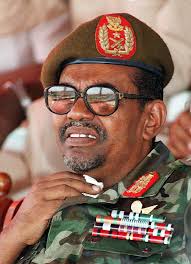
Khartoum - Sudan's president promised a future of freedom and open government on Saturday in a strikingly conciliatory speech following a week of small protests in Sudan and an uprising in neighbouring Egypt.
Omar Hassan al-Bashir's address to supporters on the outskirts of Khartoum was short on detail and made only a glancing reference to recent unrest but was notable for its disarming rhetoric.
“We open the door for freedom. We have nothing to fear from freedom ... Freedom is guaranteed by the constitution,” Bashir told the crowd.
“Anybody who wants to make chaos, we will deal with him according to the law. Our doors and our hearts and our hands are open without fear.”
Young Sudanese have mounted a series of short-lived demonstrations across the north in recent weeks complaining about price rises, and calling for political change and an end to human rights abuses.
Facebook pages and other social networking websites said the protests were inspired by the recent uprisings in Tunisia and Egypt. In each case witnesses said police, sometimes armed with batons and teargas, moved in quickly to end the protests.
Bashir's government is under additional economic and political pressure as it waits for the widely expected secession of the country's south, the source of most of its oil.
Southerners overwhelmingly voted to declare independence in a referendum in January, according to early results, in a vote promised in a 2005 peace deal that ended decades of civil war with the north.
Bashir, usually known for his more combative rhetoric, said he accepted almost all southerners had voted for separation.
He reminded the crowd that his National Congress Party (NCP) had also won the support of most northerners in last year's presidential and parliamentary elections.
“The NCP has a mandate but we open the door for everybody who wants to participate,” Bashir told the crowd in an apparent reference to northern opposition parties, some of whom have recently called for protests.
Security officers arrested 10 journalists from Sudan's Communist Party newspaper after protests on Wednesday and detained opposition Islamist Hassan al-Turabi last month.
Sudan's government has so far declined to comment on the protests in Egypt.
Bashir said a separate north would continue to be governed by Islamic Sharia law because the vast majority of its citizens were Muslim.
Bashir, who campaigned for southerners to vote for unity, has surprised many commentators with his quick acceptance of the preliminary referendum results.
Washington has offered Khartoum incentives, including removing Sudan from its list of state sponsors of terrorism, if it delivers a free and peaceful referendum and resolves its separate Darfur conflict.
U.S. officials have also suggested they might be able to help in efforts to forgive Sudan's crushing debt and ease trade sanctions. Sudan is facing an economic crisis marked by soaring inflation and a shortage of foreign exchange.
Subscribe to:
Posts (Atom)